Pelvic health problems? They’re for older people, right? Or maybe after surgery or having children? Not quite. Many people assume pelvic floor issues only show up later in life or after major events. But what if your daily toilet habits are quietly sabotaging your pelvic floor health?
Most people don’t realise that some of the most common bathroom behaviours could be setting you up for bladder issues, urgency, leakage, or even a prolapse. Long before you expect them. Let’s take a look at the toilet habits we all need to flush.
Whether it’s just before bed, pre-workout or ahead of a long drive, peeing when you don’t feel the urge might seem like the practical thing to do, but it can cause problems. It can train your bladder to expect to empty before it’s full, shrinking its capacity over time. This can lead to increased urgency and frequency, even when you don’t need to go.1
What to do instead:
Try to wait until you feel a genuine urge to go or ask your GP about bladder retraining. This involves training the bladder to do its job of filling, holding and emptying, and can help to improve your bladder’s capacity. According to Imperial College Healthcare NHS trust, people generally notice improvements within a few weeks.2
When you try to rush a bowel movement or force one before you actually feel the urge, you put extra pressure on your pelvic floor. Over time, the act of straining can weaken the muscles and put stress on your pelvic organs and nerves. This can lead to problems like bladder issues and even accidental bowel leakage.3 Regular straining is also linked to haemorrhoids, fissures and even pelvic organ prolapse.4
What to do instead:
Instead of straining, try making things easier on your body. Use a small footstool to raise your knees above your hips, this helps align your bowel for a smoother movement. Take slow, deep breaths to relax your pelvic floor rather than tensing up. And don’t forget the basics: eat plenty of fibre-rich foods and drink enough water to keep your stool soft and reduce the need to push.
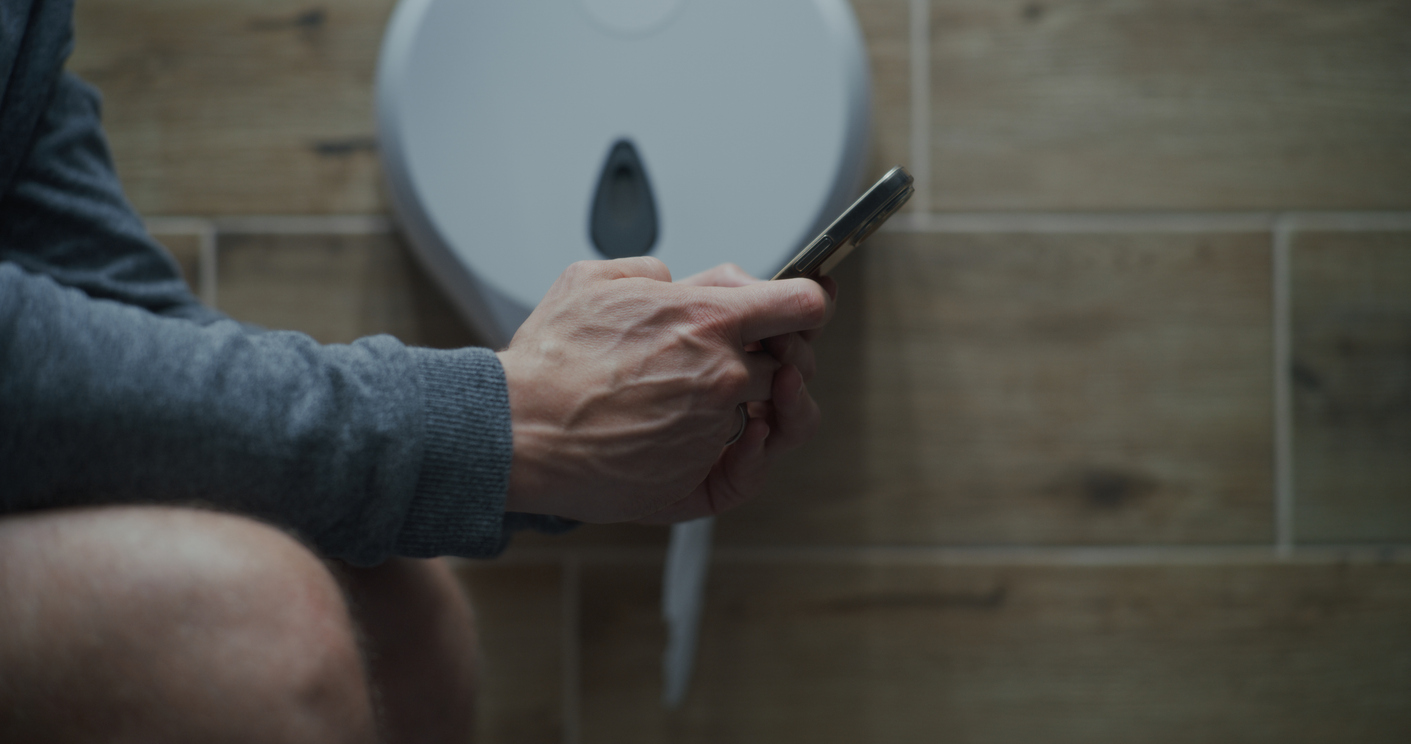
Whether you secretly do it or know someone who does, scrolling on the loo is not just unhygienic, it’s your pelvic floor’s worst nightmare. Before smartphones, you might have read the back of a shampoo bottle for a few minutes to pass the time, but now people are spending 10 minutes (or more) catching up on their social feed. The problem? Sitting for too long puts extra pressure on your pelvic floor and rectum, weakening the muscles and increasing your risk of haemorrhoids.5 If your habits have recently changed, or you regularly sit for over 15 minutes and you’re still struggling to go, there may be something going on that’s worth investigating.
According to CNN Health, it’s best to keep your toilet time short – an average of 10 minutes is ideal.6 The longer you sit, the more pressure you put on your pelvic floor. As a rule, leave your phone outside the bathroom and use those few minutes to pause and clear your mind – allow yourself to disconnect, breathe, and let your body do its thing.
We get it, sometimes public loos can be unhygienic places. Squatting above the seat to avoid contact might feel cleaner, but it’s not doing your pelvic floor any favours. Hovering prevents your pelvic floor muscles from fully relaxing, which can lead to incomplete emptying. Over time, this can cause urinary urgency, frequency and even urinary tract infections.7
Your pelvic floor works best when it can fully relax, so take a moment to sit properly on the toilet. If you’re worried about hygiene, pop down some paper or use a seat cover – it makes a big difference.
Your toilet routine matters, whatever your age. Whether you’re 25, 45 or 65, small changes like sitting properly, avoiding prolonged periods on the loo, and trying not to pee unnecessarily will help to protect your pelvic floor – the foundation for your core stability, sexual wellness and continence control. Looking for ways to look after your pelvic floor? Follow us to discover more helpful tips and healthy habits you can start today.
Sources
1. Wellest Health (n.d.) Just in case urinating. Available at: https://www.wellesthealth.com/post/just-in-case-urinating (Accessed: 5 December 2025).
2. Imperial College Healthcare NHS Trust (n.d.) Bladder retraining. Available at: https://www.imperial.nhs.uk/-/media/website/patient-information-leaflets/physiotherapy/bladder-retraining.pdf?rev=fe3651d2405f458eb84bed35e9ce8375 (Accessed: 5 December 2025).
3. Beth Israel Deaconess Medical Center (2016) All about constipation booklet. Available at: https://www.bidmc.org/-/media/files/beth-israel-org/centers-and-departments/rehabilitation-services/all_about_constipation_booklet_2016_05_rev.pdf (Accessed: 5 December 2025).
4. Harvard Health Publishing (n.d.) Hemorrhoids: A to Z. Available at: https://www.health.harvard.edu/diseases-and-conditions/hemorrhoids-a-to-z (Accessed: 5 December 2025).
5. Stylist (2022) Sitting on toilet scrolling: The impact. Available at: https://www.stylist.co.uk/health/sitting-on-toilet-phone-scrolling-impact/856321 (Accessed: 5 December 2025).
6. CNN (2024) Phones on toilet: Wellness impact. Available at: https://edition.cnn.com/2024/11/12/health/phones-on-toilet-wellness (Accessed: 5 December 2025).
7. Vibrant Pelvic Health (n.d.) Hovering over toilet seat. Available at: https://www.vibrantpelvichealth.com/blog/hovering-over-toilet-seat (Accessed: 5 December 2025).